Gardening Services in Pinner

Gardening services in Pinner can cover the regular care that keeps a garden orderly, healthy and usable through the seasons. Our work centres on practical outdoor maintenance rather than decorative promise-making, with support for lawns, hedges, planting areas, borders and general tidying. That means the service can be shaped around the garden as it is, whether it needs routine upkeep, one-off attention or a combination of maintenance tasks that keep different parts of the space working together.
A good maintenance plan usually begins with the visible structure of the garden. The lawn, boundary planting, shrubs and access paths all influence how the space looks and how easy it is to keep in shape. We therefore treat garden care as a set of connected tasks rather than a single job, matching mowing, trimming, clearance and planting support to the condition of the outdoor area. If you need a practical quote, start with the essentials and tell us what is currently in the garden.
The main value of a managed service is consistency. A garden can become untidy quickly when grass, hedges and beds are left to drift at different speeds, so we focus on keeping each element in proportion. Where a property has a modest front space, a larger back garden or a combination of both, our aim is to handle the details that improve order without overcomplicating the process. You can request a quotation once the scope is clear, and we will work from the tasks that matter most to you.
Regular Garden Maintenance
Regular garden maintenance suits customers who want the outdoor space kept under control without waiting for it to become heavily overgrown. It may include mowing, edging, pruning light growth, refreshing beds and clearing away everyday debris. This type of work is often useful where a garden needs a steady rhythm of attention rather than a single major intervention, because small, timely tasks usually prevent larger jobs from building up later.
We approach maintenance with an eye on balance. A lawn cut too short, for example, may look neat in the moment but create avoidable stress on the grass; shrubs cut without thought can lose shape and expose bare sections. Our maintenance work therefore aims to keep growth tidy while remaining appropriate to the plant type, the season and the condition of the garden. For customers comparing options, it helps to think about whether the space needs ongoing care, a seasonal refresh or support after a period of neglect. Clear priorities make quoting easier, especially when more than one area needs attention.
What routine care can include
If the garden is already maintained, routine work can stay focused on the details that preserve it. Typical tasks may involve cutting grass, shaping smaller shrubs, removing spent material, keeping borders clear and making sure hard edges remain presentable. Where a property has mixed planting, the work can be adapted so that ornamental areas, practical access routes and lawned sections all receive the right level of attention. Contact us for a quotation when the basic scope is known.
Lawn Mowing and Grass Care

Lawn mowing is often the most visible part of garden upkeep, yet the best result depends on much more than the blade height. Grass condition, recent weather, the amount of shade and the way the lawn is used all affect how it should be cut. Our lawn mowing work is intended to leave the grass even, orderly and manageable, with edges neatened where that helps the whole garden feel cared for rather than simply cut.
Different lawns need different handling. A decorative front lawn may benefit from a more precise finish, while a family garden may need a practical schedule that keeps the grass usable between visits. We can also support the surrounding details that give mowing a cleaner look, such as trimming around borders, lifting stray growth at edges and removing cuttings where appropriate. For a larger or uneven lawn, a quotation is usually best when the size and access are described plainly.
Good grass care is not just about the visible cut. Over time, lawns can develop patches, thinning areas and irregular growth patterns, particularly where they receive uneven light or foot traffic. A sensible approach is to keep the surface consistent while avoiding unnecessary stress, then combine mowing with the tidying work that stops the space from looking unfinished. If you want to arrange a straightforward review of the work, send over the basics and we can shape the service around them.
Hedge Trimming and Shrub Shaping
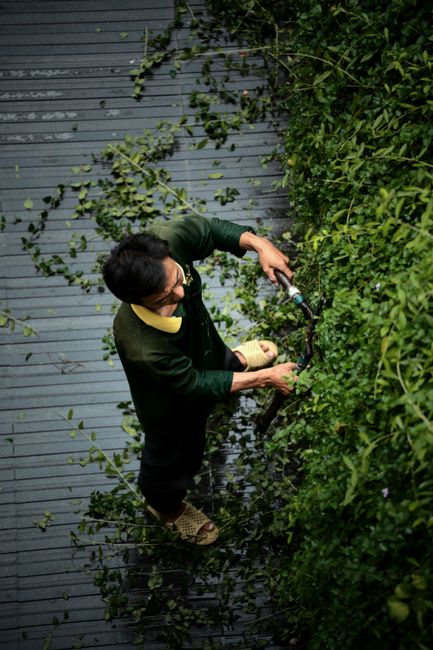
Hedge trimming is one of the most important jobs for keeping boundary planting and feature shrubs in good proportion. It helps define the edges of the garden, protects light and space, and prevents growth from spilling into paths or adjoining areas. Our trimming work is aimed at restoring a neat line while respecting the natural form of the plant, because heavy cutting is not always the best answer for a hedge that simply needs refinement.
There is a difference between light shaping and more substantial reduction. A hedge that has grown slightly uneven may only need a careful pass to restore its outline, whereas a thicker or more vigorous hedge may need measured work to reduce bulk and regain control. We also consider how the hedge sits in the garden: as screening, as a boundary, or as part of a planted scheme. That context affects how sharply it should be cut and how much detail is appropriate.
When trimming works best
Trimming is most useful when the growth is active but still manageable, or when the owner wants to maintain a set form through the season. It can also be combined with clearing away the cut material so the garden feels finished as well as tidy. Where a hedge forms a major visual feature, shaping may be more involved than a simple tidy-up, and the quotation should reflect the scale of the work rather than assuming a standard job.
Garden Clearance and Overgrown Areas
Garden clearance is suited to spaces that need a stronger reset, whether because the garden has become cluttered, the growth has outpaced routine care or the outdoor area needs opening up again before it can be maintained properly. This kind of work can involve removing loose debris, cutting back excessive growth, dealing with tangled edges and making the space easier to use or manage. It is practical, physical work that benefits from a clear brief.
In many gardens, clearance is the point at which the space becomes workable again. Once bulky growth, old material and obstructive debris are removed, it is easier to see what should stay, what should be reduced and what can be brought back into a maintenance cycle. A sensible quotation depends on the amount of material, the access available and whether the space contains mixed green waste, woody cuttings or general garden debris. If you are planning a larger clean-up, describe the current state honestly so the work can be scoped properly.
Clearance can also be useful after seasonal leaf fall, before planting changes or when a neglected area needs to be handed back into regular use. Rather than treating it as a one-off dramatic event, we see it as a reset that creates the conditions for steadier upkeep. Once the major obstacles are dealt with, the garden can move back toward manageable maintenance with less effort in the long run. Request a quotation when you are ready to compare the level of work needed.
Decking and Landscape Gardening

Some gardens need more than maintenance, especially where the layout no longer suits how the space is used. That is where decking services and landscape gardening can be helpful, because they support changes to structure, surface and planting arrangement rather than just the surface tidy-up. These jobs are often about making the garden more coherent, with the aim of improving flow between usable zones, borders and access points.
Decking work can create a defined outdoor area for sitting, moving between levels or giving shape to a garden that lacks clear structure. Landscape gardening, by contrast, can involve rethinking the arrangement of planting, lawn, edging and pathways so the garden functions in a more considered way. Both services benefit from a careful approach to materials and proportions, because the best result usually comes from fitting new features to the existing space rather than forcing them into it. Our work is grounded in practical design choices, not exaggerated promises.
Choosing between upkeep and change
If the garden mainly needs tidying, routine maintenance may be enough. If the layout is awkward, the surfaces are worn or the planting no longer serves the space, a larger landscape project may be more appropriate. Many customers begin with a maintenance enquiry and then discover that a small structural change would make the garden easier to look after in the future. When that happens, it helps to discuss the task in stages rather than trying to fit everything into one description.
Planning the Work and Requesting a Quotation
When asking for a quotation, it helps to focus on the garden as it is now and the result you want from the work. A clear note about the main tasks is usually more valuable than a long description of the whole property. For example, mention whether the work is mostly mowing, hedge trimming, clearance or a combination of jobs. If there are access considerations, heavy cuttings or areas that need extra attention, include that too so the estimate reflects the real workload.
It can also be useful to separate urgent items from the work that can wait. A quotation for garden services should reflect the actual priorities, not a guessed bundle of tasks that may not be needed. The more accurately the scope is described, the easier it is to match the service to the garden and avoid unnecessary additions. Keep the request practical, and the conversation can stay focused on the work itself. If you are ready, you can ask for a quotation in plain terms and we will respond to the information provided.
Before you send the details, think about whether the service is a one-off clearance, a seasonal tidy, a regular maintenance plan or a larger improvement project. That distinction helps shape the approach as well as the likely sequence of tasks. Clarity at the start usually saves time later, especially where several parts of the garden need different levels of care or where the work must be phased. A simple message is enough to begin the process.
Additional Services That Support the Garden
Alongside the main maintenance tasks, some gardens benefit from linked services that help the outdoor space look complete and remain manageable. Tree lopping and removal can be relevant where branches are overextended, obstructive or in poor condition, while smaller landscape adjustments may be useful where planting beds or boundaries need reworking. These are distinct jobs, and each should be quoted according to its own size and complexity rather than being treated as an automatic extra.
Recycling and sustainability also matter in outdoor work because cuttings, branches and clearance material need a sensible route away from the site. Where possible, garden waste should be handled in a way that keeps the work tidy and avoids leaving the area half-finished. That practical finish is often as important as the cutting or clearing itself. If a project includes mixed tasks, it is usually best to identify them separately so the schedule, labour and disposal requirements remain clear. This approach supports a cleaner result without overstating what the service includes.
Making the right combination of services
Some customers only need one task, while others need a combination that brings the whole garden back into shape. A hedge that needs trimming may sit beside a lawn that needs mowing and a border that needs a reset. In that situation, grouping the work sensibly can make the outcome more coherent and reduce the risk of leaving one area looking unfinished. Ask for a quotation once the mix of tasks is known, and keep the request tied to the actual condition of the garden.
About Pinner
Pinner is a historic district in the London Borough of Harrow, in northwest London, with a centre that developed around a village green and retained a strong sense of place despite suburban growth. Its built character includes a mix of older houses, interwar streets and later residential development, with the conservation area around Pinner Village helping to preserve the appearance of the historic core. The area is also known for the parish church of St John the Baptist, whose origins go back several centuries, and for the annual Pinner Fair, a local event with roots in the 18th century that remains part of the district’s cultural calendar. The surrounding streets show the gradual spread of settlement beyond the original village, while still keeping a recognisable centre of shops, public buildings and pedestrian activity. Green spaces add to that character: Pinner Memorial Park provides a substantial public open area, and nearby waterways such as the River Pinn contribute to the landscape and to the district’s name. The local scene combines residential calm with a visible historic core, making Pinner feel neither purely urban nor wholly rural, but a layered suburban place with a clear identity.
Seasonal Care and Longer-Term Garden Improvement

Seasonal garden work is often what keeps the rest of the year manageable. In spring, gardens may need fresh cutting, border tidying and the first pass at controlling new growth. In summer, attention often shifts to keeping lawns, hedges and beds in proportion as growth becomes more vigorous. In autumn, leaf fall and general clearance become more important, while winter can be a useful time for reduction, reshaping and planning. Each season brings different priorities, so the service should adapt rather than repeat the same routine blindly.
Longer-term improvement usually starts with a clear sense of what the garden is meant to do. A neat decorative frontage needs different care from a family garden designed for play, storage and everyday use. Likewise, a planted space with structure and form may need more careful shaping than a simple functional plot. We can work with these differences by focusing on the jobs that support the garden’s purpose, rather than trying to impose a generic formula. This is where measured maintenance and selective improvement work well together.
Where a garden has drifted from its best condition, it may be sensible to tackle the work in stages. That can mean clearance first, then trimming, followed by ongoing upkeep once the main burden has gone. Staged work is often the most practical route when the garden contains mixed problems or when the aim is to restore the space without rushing it. If you would like to move ahead, the next step is straightforward: ask for a quotation and outline the tasks you want completed.
Clear Communication and a Straightforward Service

A clear request helps the service run smoothly from the beginning. It is usually enough to explain which parts of the garden need attention, how urgent the work is and whether the space is best described as routine maintenance, a one-off tidy or a larger clearance job. If there are access issues, awkward corners or areas with heavier growth, those details should be included because they affect the time and effort required. No elaborate briefing is needed, just an honest outline of the garden’s current condition.
Once the main tasks are understood, the quotation can be focused on the actual work instead of on guesswork. That is especially useful where a garden includes several separate needs, such as grass cutting, hedge trimming and minor clearance all in one visit. The aim is not to overstate the job, but to keep it clear enough that the right work can be arranged at the right level. If your garden is ready for attention, you can request a quotation in simple terms and we will take it from there.
The easiest enquiries are often the ones that stay specific. Mention the service type, the size of the job and any key details that may affect the work, then ask for the quote you need. Plain information is usually enough, and it keeps the process efficient for both sides. If you are ready to begin, make your request today and we will help shape the service around your garden.